Deadly Hebron Attack Triggers Sweeping IDF Operation Across Judea and Samaria
Two soldiers were killed in a shooting attack near Hebron on October 23, 2026. The attackers were killed within minutes, and a counterterrorism sweep across Judea and Samaria followed within days.
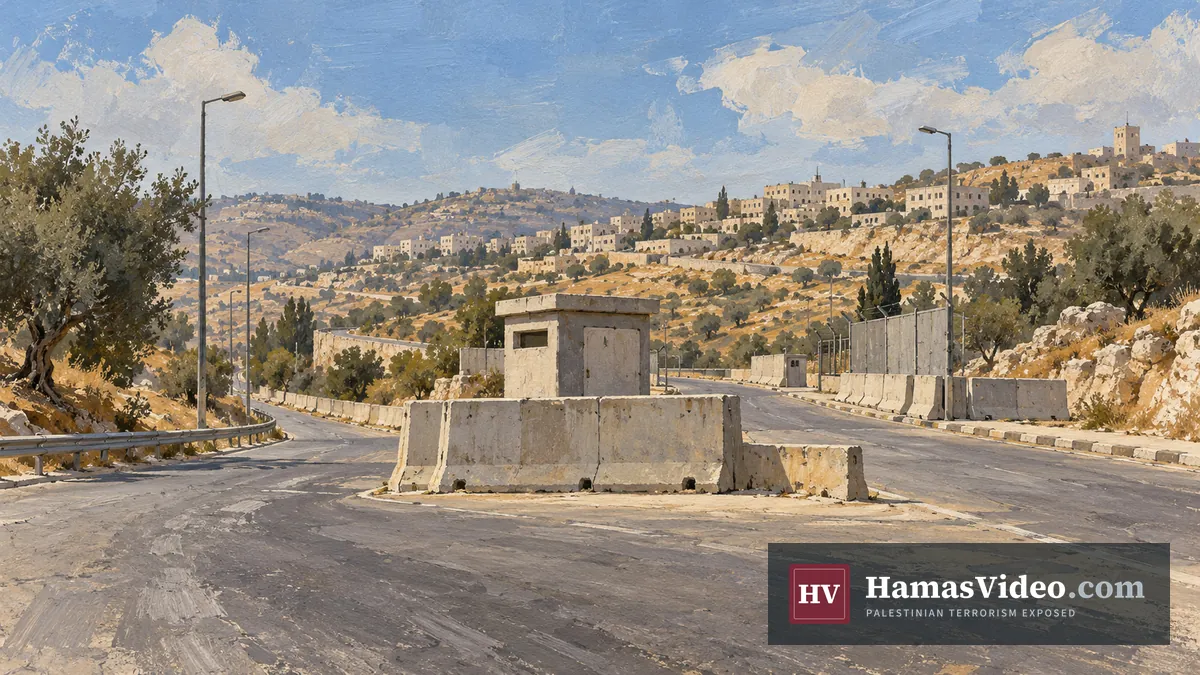
On October 23, 2026, two Israeli soldiers were killed in a shooting attack at Yehuda Junction on Route 35, near Hebron. Within days, Israeli security forces had launched counterterrorism raids across hundreds of locations in Judea and Samaria.
The attack at Yehuda Junction
Two Palestinian gunmen got out of a vehicle at the junction and opened fire on an Israeli military patrol. Staff Sgt. Ron Yonatan Roytman, 23, of Ashkelon, a squad commander in the Ari Battalion (775) of the Search and Rescue Brigade, and Sgt. Yuval Shai Svilem, 20, of Hod Hasharon, a combat soldier in the same battalion, were killed. Three other soldiers were wounded, with injuries described as minor.
The gunbattle lasted more than 20 minutes. Reinforcements, including the battalion's deputy commander and a company commander, arrived and flanked the attackers, who were killed at the scene. A search of their vehicle turned up a large quantity of ammunition. Israeli authorities said they believed the two men had planned a larger attack reaching main roads and had intended to target civilians. The attackers were identified as Hamouda al-Jaaba and Firas al-Jaaba, both 27, from Hebron and from the same extended family. Investigators were still working to determine whether the two had acted as part of a cell directed by an organized group or on their own.
A security response across the West Bank
IDF Chief of Staff Lt. Gen. Eyal Zamir praised the responding soldiers, saying their swift actions prevented an even more serious attack. The battalion commander said the unit had neutralized the threat during its first operational deployment. In the attack's immediate aftermath, Israeli forces closed the nearby towns of Hebron and Halhul to entry and exit and applied the "Gray Bolt" security procedure to Palestinian vehicles across the army's Central Command area. Prime Minister Benjamin Netanyahu said the army would evacuate residents of the Hebron neighborhood the attackers came from, search homes there, and destroy terrorist infrastructure.
Part of a wider pattern
On October 25, two days after the attack, Israeli forces reported that counterterrorism raids launched in more than 400 locations across Judea and Samaria had led to the arrest of 40 Palestinian suspects. The raids followed a similar, larger sweep weeks earlier: in mid-September 2026, Israeli troops said they had arrested 230 wanted Palestinians, seized more than 100 weapons, and searched over 1,200 locations, including an explosives-manufacturing facility, in operations across the same region. Taken together, the two sweeps point to a pattern of recurring Israeli operations in Judea and Samaria throughout 2026, from weapons seizures to mass arrest drives targeting wanted suspects, aimed at disrupting attack planning before it reaches Israeli roads and communities.
Staff Sgt. Roytman's funeral was held at the military cemetery in Ashkelon, his hometown, the Sunday after the attack. The Yehuda Junction ambush was the latest reminder that the threat facing Israeli soldiers and civilians in Judea and Samaria has not stopped, even as public attention in Israel has often turned to Gaza. For the units deployed there, including soldiers on their first operational rotation, confronting that threat is now part of daily reality.